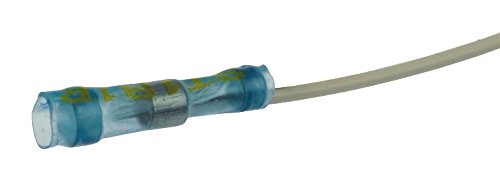
Raychem Te Connectivity 10
RAYCHEM TE CONNECTIVITY Solder Sleeve Terminator Blue (Transparent) 7.6 mm PVDF Transparent 7.6 mm Lead-6pack
Description
Product Overview
Capacitors: Key Components in Electronic Circuits
Capacitors are essential elements in electronic circuits, playing a crucial role in various applications. They are devices that store electrical energy in an electric field. Understanding their function and characteristics is vital for any electronics enthusiast or engineer.
What Are Capacitors?
A capacitor consists of two conductive plates separated by an insulating material called a dielectric. When a voltage is applied, one plate becomes positively charged, and the other becomes negatively charged. The dielectric prevents the plates from touching, but it allows the electric field to pass through.
Types of Capacitors
There are several types of capacitors, each with its own advantages and applications. Here are some common types:
- Film Capacitors: These capacitors have a thin film as the dielectric. They are known for their high stability and reliability.
- Electrolytic Capacitors: These capacitors are widely used in power supply circuits. They have a high capacitance but are polarized.
- Tantalum Capacitors: These are usually polarized and offer a high capacitance density. They are compact and have a long service life.
Applications of Capacitors
Capacitors are used in a variety of electronic devices and systems. Some of their common applications include:
- Power Supply Filtering: Capacitors help in smoothing out power supply voltage.
- Decoupling: They provide a path for high-frequency noise to ground.
- Audio Filtering: Capacitors are used to filter out unwanted frequencies in audio circuits.
- Timing Elements: Capacitors are used in timing circuits, such as in oscillators.
Key Features of Capacitors
- High Reliability: Capacitors are designed to withstand harsh conditions and provide long-term performance.
- Wide Operating Temperature Range: Capacitors can perform well in extreme temperature conditions.
- Low ESR (Equivalent Series Resistance): Low ESR means less energy loss during operation.
Choosing the Right Capacitor
When selecting a capacitor for your project, consider the following factors:
- Capacitance Value: Ensure the capacitor meets your required capacitance.
- Voltage Rating: Choose a capacitor with a voltage rating higher than the maximum voltage your circuit will see.
- Temperature Coefficient: This measures how the capacitance changes with temperature.
Capacitors are crucial in electronic circuits, offering stability, filtering, and timing. Understanding their types, applications, and key features will help you select the right capacitor for your project.


